
Lafayette County Arrest Records and Court Charges
A Lafayette County arrest record documents the arrest itself. It shows who was taken into custody, which agency made the arrest, and the booking that came next. Arrests here are made by the Lafayette County Sheriff's Department, the Oxford police, campus officers, or state troopers. That record is created on the law enforcement side. The charge record begins on a separate track. Once a person is booked, a prosecutor reviews the matter and decides the formal charges, then files them with the court clerk. Those filed charges become part of the court file and are tracked as the case moves forward.
These two records answer different questions. The arrest and booking side tells you whether a person is or was held, which is jail roster information. The booking detail for the local jail sits with the inmate records for the Detention Center. The court charge record tells you what the prosecutor actually filed and how each count is doing. Court charges after arrest do not always match the offense an officer wrote at the scene. The full case file, with pleas, hearings, and the final outcome, lives with the criminal court records for the case.
Filing Charges After a Lafayette County Arrest
The charge record opens when a prosecutor files a charging document. In Mississippi, felony prosecution rests with the Third Circuit District Attorney, whose office covers Lafayette and six neighboring counties. Lower courts handle the first steps. A misdemeanor or traffic matter may start with an affidavit or citation in Justice Court or Oxford Municipal Court. A felony usually moves toward the grand jury and trial in Circuit Court. Three main documents put a charge on the record, and each one starts the case in a slightly different way.
The court that hears a charge depends on the offense level and the agency that made the arrest. The Mississippi Judiciary outlines the jurisdiction of each trial court, which sets where a filing lands.
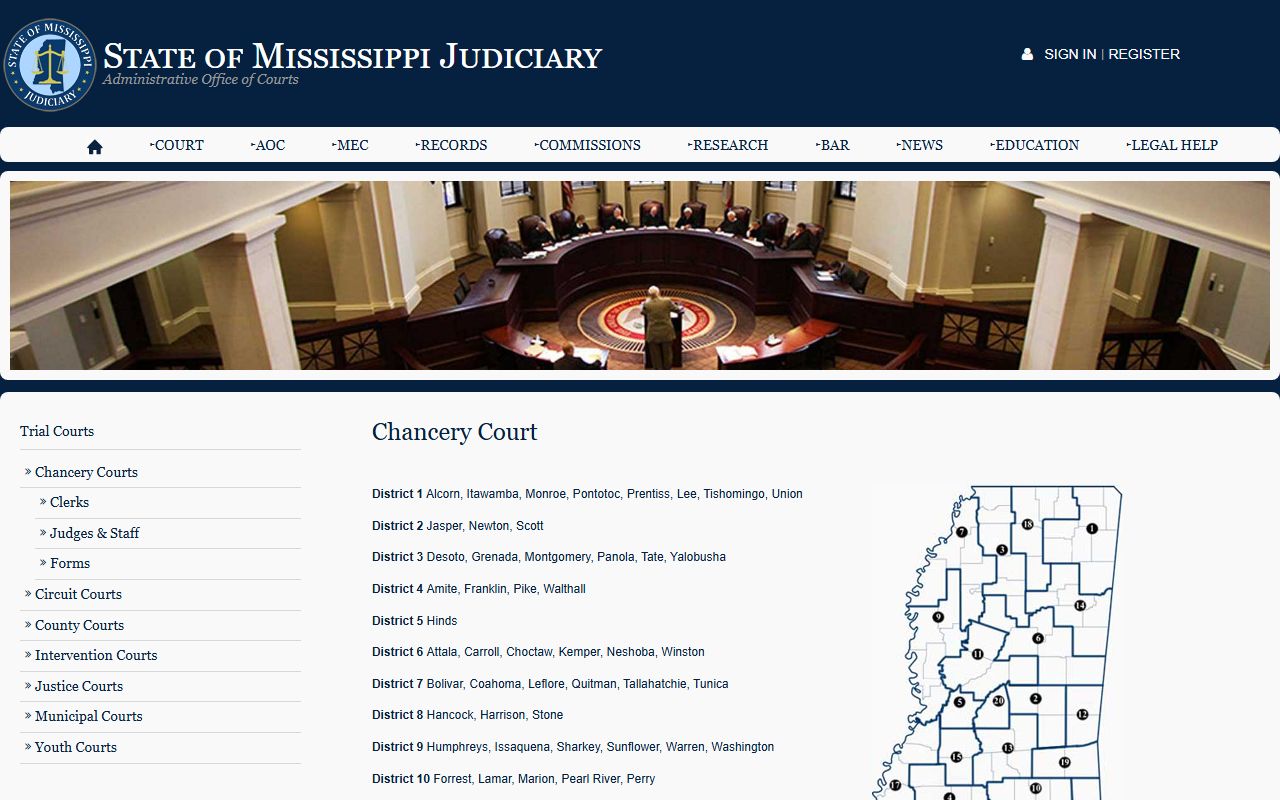
That same court structure that splits equity matters from law matters also routes criminal charges. Felony counts are filed and tried in Circuit Court, while most misdemeanor counts stay in Justice or Municipal Court.
| Complaint | Information | Indictment | |
|---|---|---|---|
| Filed By | Officer or prosecutor | Prosecutor | Grand jury |
| Common For | Misdemeanors | Some felonies | Serious felonies |
| Usual Court | Justice or Municipal | Circuit | Circuit |
| Effect | Starts the case | Starts the case | Starts the case |
Lafayette County Charge Codes and Levels
Every charge points to a specific section of the Mississippi Code. The code tells the court what the alleged offense is and how serious it is. One arrest can produce several separate charges, and each charge stands on its own. A driver stopped on one night might face a felony count, a misdemeanor count, and a traffic count from the same stop. The severity level shapes which court hears the matter, the possible penalty, and whether a grand jury must act before the case proceeds.
- Felony
- A serious offense, generally punishable by more than one year, prosecuted in Circuit Court.
- Misdemeanor
- A lesser offense handled in Justice Court or Oxford Municipal Court.
- Ordinance violation
- A breach of a city rule, charged in Municipal Court.
- Count
- Each separate charge tied to a single statute within one case.
Reading the code beside each count matters. A charge labeled only by a common name can hide whether it is a felony or a misdemeanor, and the level drives almost everything else in the file. The same conduct can be charged at different levels depending on the facts, prior history, and the value or harm involved. That is why two cases with similar headlines can move through very different courts.
Charge levels also shape timing. A felony often waits for a grand jury before it advances, so the early record may show only an arrest and a holding charge. A misdemeanor can be resolved in a single setting. The level a prosecutor selects at filing is not always the level that survives to the end of the case.
Lafayette County Charge Status Explained
Charges rarely sit still. As a case moves, a count can be amended, reduced, added, dropped, or dismissed. A felony can be reduced to a misdemeanor through a plea. A weak count can be dismissed while stronger counts go on. The prosecutor can also decline to pursue a charge, which the record marks as nolle prosequi. The status field shows where each count stands today, not where it started.
| Status | What It Means |
|---|---|
| Pending | The charge is filed and waiting for a hearing, plea, or trial. |
| Amended / Reduced | The charge was changed to a different or lesser offense. |
| Dismissed | The court dropped the charge, with or without prejudice. |
| Nolle Prosequi | The prosecutor chose not to pursue the charge. |
| Bound Over | The charge was sent forward to a grand jury or higher court. |
A charge marked dismissed without prejudice can be refiled if the law allows, while a charge dismissed with prejudice cannot come back on the same claim. A pending status means nothing is settled yet. Status alone does not tell the whole story, so the disposition and any sentence belong with the full case file, and the most current status should always be confirmed with the clerk before anyone relies on it.
How to Find Lafayette County Arrest Records
Charges and their status show up in the court case index, while booking detail stays on the jail side. For Circuit and County Court matters, the Delta Computer Systems case search is the main public portal. It lets you search by party name, case number, or filing date, and it flags criminal cases. The portal carries a notice that record updates ended February 26, 2024, so it works best for older or previously posted cases. Active and e-filed records may route through Mississippi Electronic Courts instead.
- Open the Circuit and County Court case search portal.
- Search by the defendant name in last, first order, or by case number.
- Open the case and read the full charge list.
- Check each charge for its code, level, and current status.
Lower court charges follow their own paths. Sheriff, campus, and highway patrol citations route to Justice Court, while Oxford police charges route to Oxford Municipal Court, and neither posts a full public case search online. For those records, a phone call or a counter visit is usually the fastest route. For current, certified, or sealed records the main portal will not show, contact the Circuit Clerk at the courthouse. Booking questions go to the jail rather than the court index, since the jail docket and the court file are kept by different offices.
Charges Versus Convictions
Being charged is not the same as being convicted. A charge is an accusation that a prosecutor must still prove. A conviction is the result of a guilty plea or a verdict after the proof is weighed. The burden is far higher at conviction than at charging. Many charges in the record never become convictions, so reading a charge as proof of guilt is a mistake.
| Charge | Conviction | |
|---|---|---|
| Stage | Accusation | Verdict or plea |
| Burden of Proof | Probable cause | Beyond a reasonable doubt |
| Shows Guilt | No | Yes |
| Public Record | Yes | Yes |
Statewide Charge and Criminal History Lookups
A single county search does not capture a person's full record. Charges and convictions across Mississippi roll up through state systems, and each one covers a different slice. The Mississippi Department of Corrections search lists people sentenced to state custody or parole, found by first name, last name, or MDOC ID. That is not the same as pretrial county jail custody, and it does not show dismissed or pending charges.
Driver records are a separate file again. A traffic charge can sit in a court record while the conviction also reaches the state driving history kept by the Department of Public Safety. That driving history is not a criminal history, and a clean driving record does not mean a clean court record. Each system tracks its own slice of the same event.
Mississippi does not post a single free public rap sheet that combines every county. A full criminal history check runs through state and federal channels, often for employment or licensing, and those are governed by their own rules. Court files, the corrections search, and a formal background check each answer part of the question, and no one source is complete on its own. When the goal is one person's full charge history, plan to check more than one place and confirm each result with the office that holds the record.
Restricted Charge Records in Lafayette County
Not every charge record is open to the public. Youth court charges are confidential. Lafayette County Court holds exclusive youth court jurisdiction, and Section 43-21-251 keeps youth court records and their contents private except as youth court law allows. A child's delinquency or abuse case will not appear in an ordinary public docket search.
The Mississippi Bar guide to the rights of juveniles who are arrested explains how youth court confidentiality and sealing work.
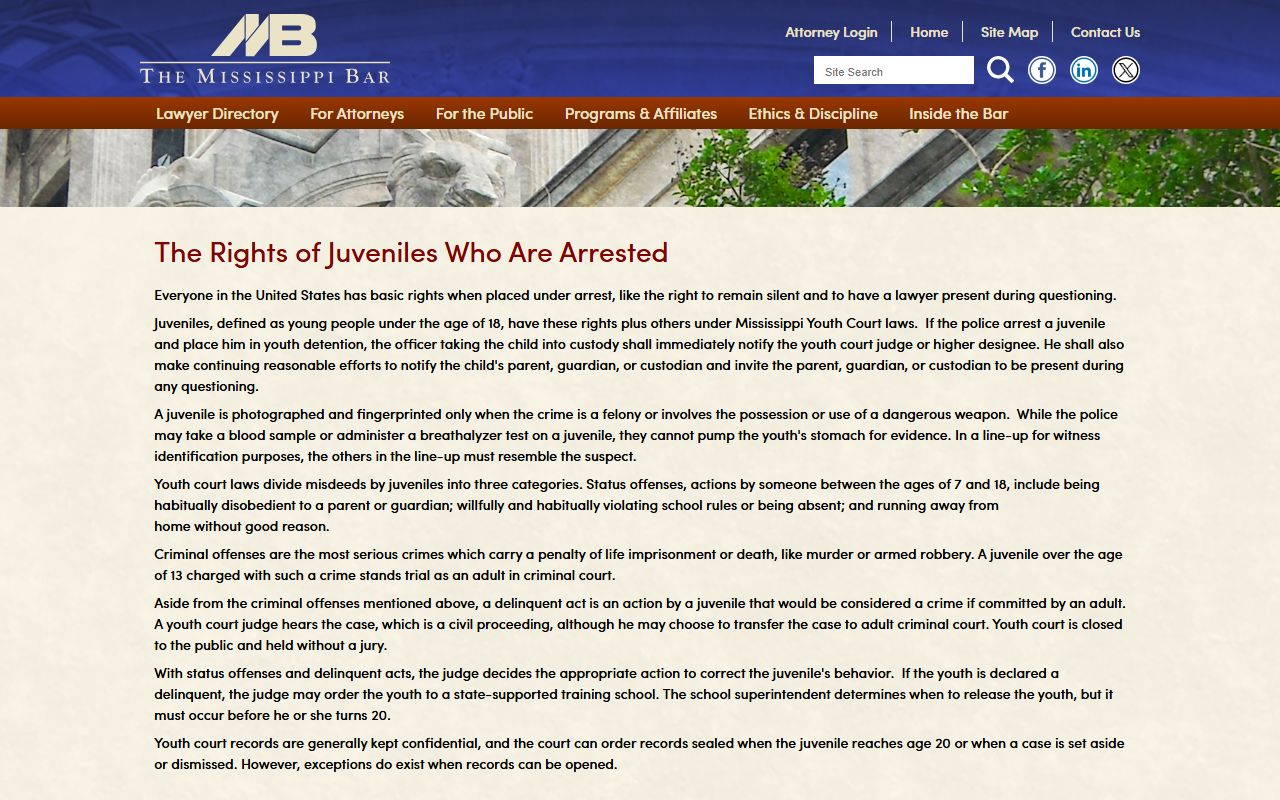
The guide notes that a youth court can order records sealed when the juvenile turns twenty or when a case is set aside, with narrow exceptions. Adults face different rules for clearing a record. Section 99-19-71 governs expunction for many dismissed, acquitted, or first-offender matters, and some convictions, subject to waiting periods and exclusions. An expunged charge is removed from public access, and the local expungement fee runs $150 or $161 depending on the statute used.
Disclosure of a child's record is tightly limited. Section 43-21-261 sets out exactly who may see youth court records and when a court order is required.
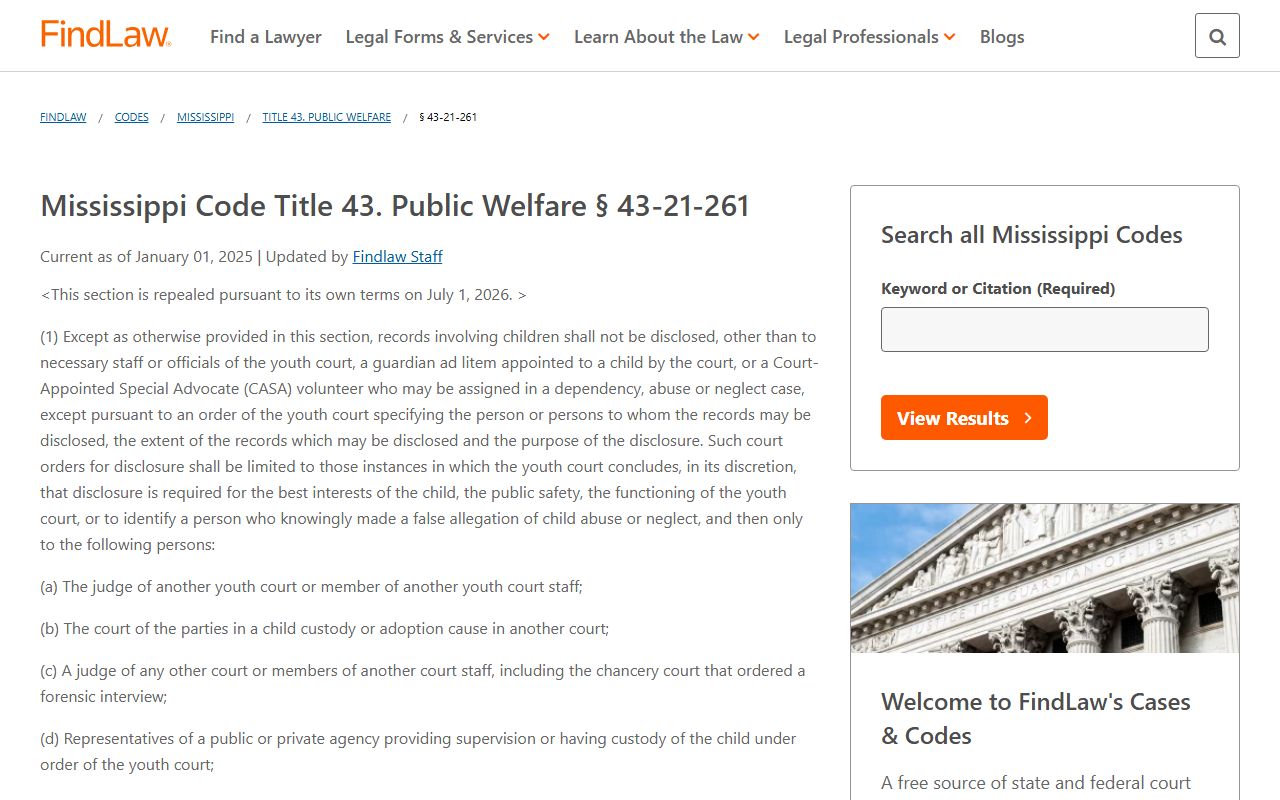
Sealed counts, pending investigations, and protected fields stay out of public copies as well. Mississippi's Public Records Act opens court records for inspection unless a law or court order says otherwise, and public copies routinely redact Social Security numbers, account numbers, and the names of minors. Note: a court may keep a case file open while still restricting specific sealed or sensitive documents inside it.
Important: This site is not a consumer reporting agency under the Fair Credit Reporting Act, and its information may not be used for employment, housing, credit, or other FCRA-regulated screening.