
What Probate Covers in Lafayette County
Mississippi has no separate probate court. The state hands estate work to its equity court, and in Lafayette County that is the Chancery Court. This is the same court that handles divorce, child custody, and land title disputes. Probate sits inside that broad equity role. The court proves wills, appoints the people who settle estates, and oversees the care of those who cannot care for themselves.
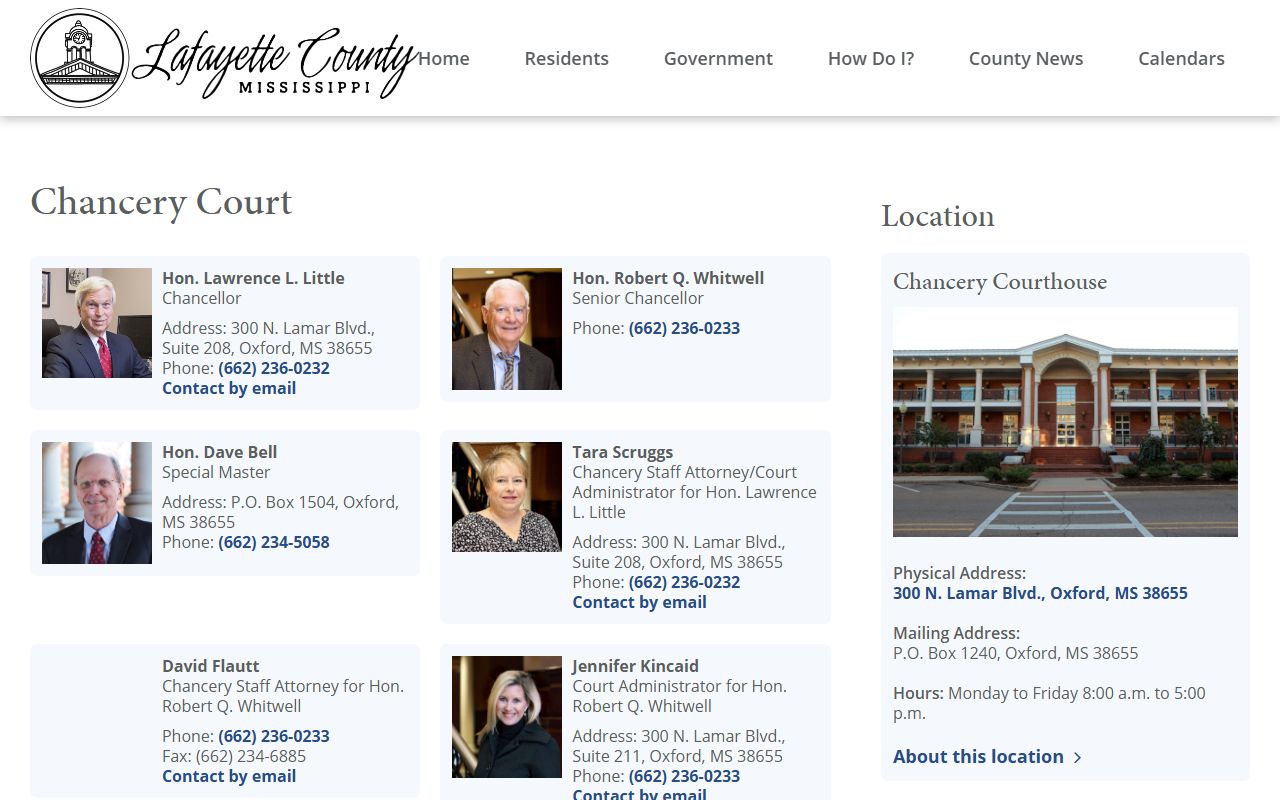
The county's official Chancery Court page describes a court that hears last will and testament cases, guardianships, conservatorships, and matters involving persons of unsound mind. The Lafayette County Chancery Court page sets out that equity jurisdiction in plain terms. The page covers the full range of estate and family matters the court reviews. Because one court handles so many private subjects, the same chancellor who rules on a will may also decide a guardianship or a name change in the next case.
Estate filings come in several flavors. The Mississippi civil cover sheet groups them as probate, accounting, conservatorship, guardianship, heirship, intestate estate, minor's settlement, muniment of title, name change, testate estate, and will contest. Each starts a chancery case file. Chancery Clerk Mike Roberts is the custodian for those records and runs the counter where families request probate copies. His office, not the Circuit Clerk, holds wills and estate folders.
Probate Terms Defined
Estate paperwork leans on a small set of legal words. Most petitions, orders, and letters repeat them. A quick reference helps when reading a Lafayette County probate file or talking with the Chancery Clerk's staff.
- Testator
- The person who wrote and signed a will. When the testator dies, the court reviews the will to confirm it is valid.
- Executor
- The person named in a will to gather assets, pay debts, and distribute property. The court issues letters that prove the executor's authority.
- Intestate
- Dying without a valid will. An intestate estate passes to heirs under Mississippi descent and distribution rules rather than by written instructions.
- Guardianship
- A court arrangement that places a minor or an incapacitated adult, plus that person's care decisions, under a guardian the chancellor approves.
- Conservatorship
- A court arrangement that puts an adult's money and property under a conservator when the adult cannot manage finances safely.
Searching Lafayette County Probate Records
Older chancery cases once lived on the Delta Computer Systems search site. That public form still loads, and it lets you query by case number, party name, styled plaintiff or defendant, filed date, and docket book and page. Read the banner first, though. The Delta Chancery Court case search now warns that court records have moved to Mississippi Electronic Courts and that current information should come from the Chancery Office. Treat the legacy form as a limited starting point, not the final word.
Current estate documents are filed through Mississippi Electronic Courts. The Chancery Clerk's office began opening cases and filing documents in MEC in mid-2023, with attorney electronic filing following soon after. Public case detail in that system can require an account and court-specific access. Because of this split between old and new systems, the counter remains the most reliable route. Visiting the Chancery Clerk in person is the surest way to pull a will, an estate folder, certified letters, or an old probate file.
For records that are not in any portal, the county also offers a formal route. The Lafayette County public records page links a request form and lists the Chancery Courthouse as a records location. Use it when a probate-related county record sits outside an online case system. Some guardianship and mental-health materials are restricted and may need a court order before release.
Note: Delta still serves Lafayette County land records, so deeds and title documents tied to an estate may surface there even after court files moved to MEC.
Lafayette County Chancery Court Office
Probate, divorce, guardianship, and land matters all route to one building, the Chancery Courthouse on North Lamar. It sits off the Oxford Square, across from Uptown Coffee, a short walk from the main county courthouse. The Chancery Clerk keeps the estate records there, and the chancellors hold court in the same building. Call ahead before a visit, since passport service and some counter functions keep shorter windows than the posted office hours.
Lafayette County Chancery Court & Chancery Clerk
300 N. Lamar Blvd.
Mailing: P.O. Box 1240
Oxford, MS 38655
Chancery Clerk: (662) 234-2131
Chancery Court staff: (662) 236-0232 / (662) 236-0233
Mon-Fri 8:00 a.m.-5:00 p.m.
Lafayette County Probate Filing Fees
Probate fees are not set by the general court schedule. The Circuit and County Court fee list does not govern chancery filings, so exact probate amounts come from the Chancery Clerk fee list or a quick call to the office. Payment rules changed in 2023. Since May 23, 2023, the Chancery Clerk takes debit and credit cards and no longer accepts personal checks. The table below shows general chancery and copy items the county documents support. Confirm any specific estate or guardianship filing cost with the Chancery Clerk before you file.
| Item | Amount / note |
|---|---|
| Probate, estate, and guardianship filing fees | Per Chancery Clerk fee list; call (662) 234-2131 |
| Certified copy of letters or orders | Confirm current rate with Chancery Clerk |
| Small-estate affidavit threshold | Verify current dollar limit with Chancery Clerk |
| Accepted payment | Debit and credit cards; no personal checks after May 23, 2023 |
Note: published copy and certification charges shift over time, so verify the latest figures with the Chancery Clerk rather than relying on an old quote.
How Probate Works in Lafayette County
Every estate follows a similar arc, whether the person left a will or not. The chancellor oversees the steps, while the Chancery Clerk dockets the filings and issues certified papers. Knowing the order of events helps families gauge what stage a case has reached.
- Determine whether the decedent had a will. Testate estates involve proving the will, while intestate estates proceed under Mississippi heirship rules.
- File the petition, civil cover sheet, death certificate where required, the original will if any, an oath, a bond if ordered, and proposed letters with the Chancery Clerk.
- The Clerk opens and dockets the case, and court documents are filed through MEC.
- The chancellor may appoint an executor, administrator, guardian, or conservator and issue letters of authority.
- The fiduciary handles notice to creditors and heirs, the inventory, accountings, debts, sale or transfer of property, and distribution.
- Will contests, heirship disputes, guardianship objections, and out-of-state property can lengthen a case for months or years.
- Certified copies of letters or orders come from the Chancery Clerk, who can quote the copy and certification cost.
Inside Lafayette County Probate Records
A probate file grows as a case moves. The opening petition names the decedent or ward and the person asking to serve. After that, the folder fills with the documents the chancellor and clerk generate along the way. Reading the contents shows who controls the estate and how property is being handled.
A typical estate file in Lafayette County can include the case, docket, and file numbers, the decedent or ward name, and the estate type, whether testate, intestate, heirship, accounting, minor settlement, or muniment of title. It also holds the fiduciary and attorney names, the oath, the letters, and any bond. The will and the order admitting it to probate appear in testate cases. Inventories, accountings, hearing notices, and orders follow as the case proceeds.
Some details are trimmed before a public copy is released. Minor names, medical information, financial account numbers, and sealed guardianship or mental-health material are commonly redacted. A name change, an heirship determination, or a muniment of title gives shorter files than a contested estate that drags on. The Chancery Clerk can tell you which documents in a file are open for inspection.
Letters are the documents people request most often. Banks, title companies, and brokerages frequently ask an executor or administrator for certified letters before they will release a decedent's assets. Those certified papers come from the Chancery Clerk, who stamps and dates each copy. Order a few extra at once, since each institution that holds estate property may demand its own original.
Restricted Lafayette County Probate Records
Most estate dockets are open for inspection, yet probate touches some of the most private matters a court sees. Mississippi balances open records with privacy, so parts of a file can be closed or heavily redacted. Guardianship and conservatorship cases often hold medical evaluations and financial details that the court protects. Mental-health and substance-abuse commitments run through the same Chancery Court and carry the strongest confidentiality, since they involve diagnoses and treatment. A request for those materials may require a court order before the clerk releases anything.
Adoption is handled in Chancery Court too, and those records are generally confidential or limited to the parties with statutory or court authorization. Estate files that overlap with family matters, such as a minor's settlement or a divorce-linked property issue, may share the same privacy limits found in marriage and divorce records. Mississippi's small-estate path under Section 91-7-322 lets qualifying successors collect certain property after a waiting period without full administration. The exact dollar threshold has shifted in recent years, so confirm the current limit and affidavit rules with the Chancery Clerk before relying on it.
Note: when a clerk redacts part of a probate file, the underlying case usually stays open, but specific protected documents are withheld from the public copy.