
Lafayette County Inmate Search Channels
The most reliable way to locate a person in local custody is a direct call to the jail. The Lafayette County Detention Center answers custody questions at (662) 234-6421, and lobby inquiries go to 711 Jackson Ave. East in Oxford. Staff can confirm whether someone is currently held, what the booking covers, and which court to call about bond. The county Sheriff's Department maintains the jail docket, so the sheriff's staff and the detention center share the same custody information. No official county website publishes a searchable jail roster with field-level inmate profiles. Because of that gap, the phone and the front desk remain the primary tools, not an online lookup form.
An online search will not return a full picture of who is in the building. The county does not post mugshots, booking numbers, or housing assignments on a public profile page. State and federal custody also fall outside the county jail. A person sentenced to state prison appears in Mississippi Department of Corrections data, while federal detainees move through the U.S. Marshals and the Bureau of Prisons. Knowing that difference keeps a search pointed at the agency that actually holds the person.
The county keeps an official facility page for the jail that confirms its address and visitor parking.
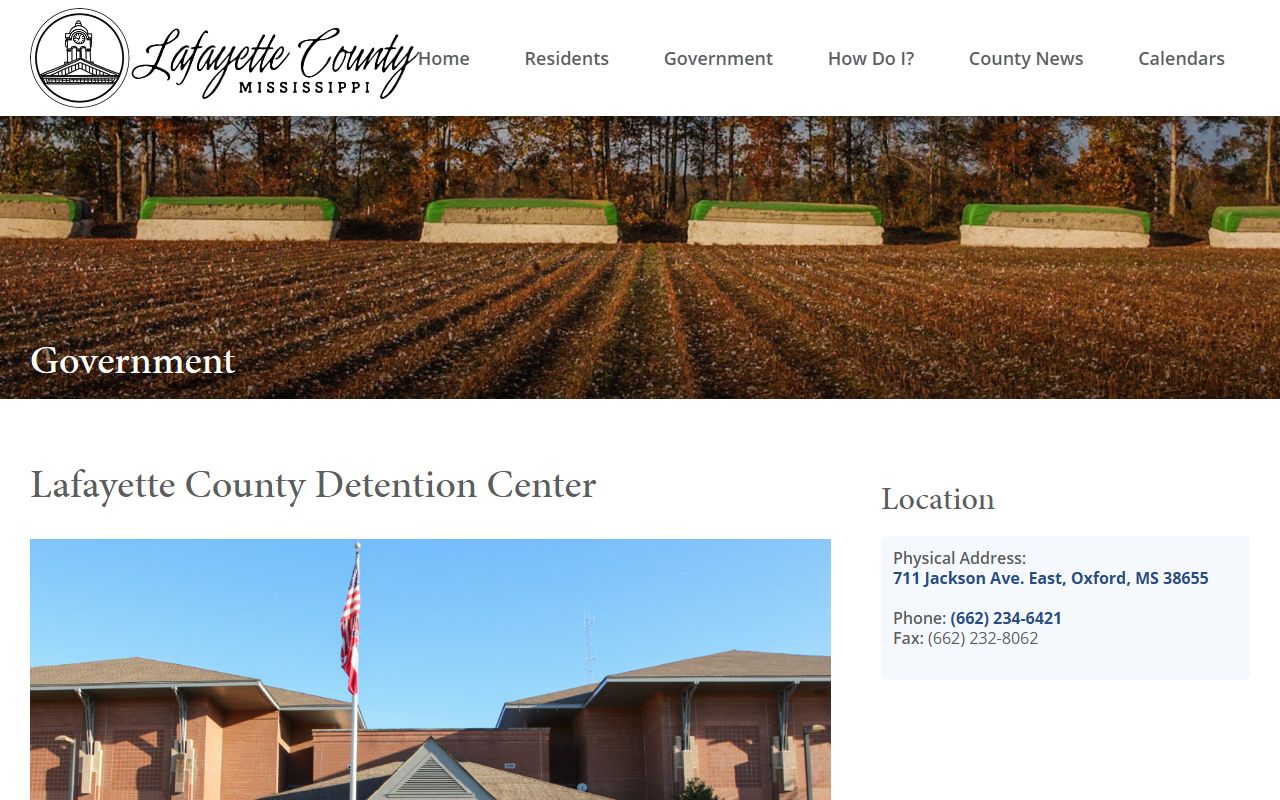
That page is the anchor for custody contact, since it lists the same Jackson Avenue location used for in-person inmate inquiries.
How to Check Custody in Lafayette County
A custody check works best as a short, ordered routine. Have the full legal name, any aliases, and an approximate booking date ready before you call. The steps below match how the detention center and the clerks actually field these requests.
- Gather the person's full legal name, date of birth if known, and the approximate arrest date.
- Call the Lafayette County Detention Center at (662) 234-6421 to confirm whether the person is in custody.
- Ask for the booking charge, the bond amount or type, and which court hears the first appearance.
- Note the arresting agency, since it decides whether Justice Court, Municipal Court, or County Court routes the case.
- Cross-check the charge and bond with the matching court clerk when you need an official document.
- If the person was sentenced and moved to state prison, switch the search to the Mississippi Department of Corrections.
Lafayette County Detention Center Contact
The detention center sits just west of the Oxford Square on Jackson Avenue. Free visitor parking is available in front of the building, with paid and free overflow parking nearby when the lot fills. The county does not publish a fixed bed count or capacity figure in its facility materials, so questions about housing space go to the jail directly. The same office handles the jail docket, custody confirmation, and visitation scheduling, which makes it the one number worth saving.
Lafayette County Detention Center
711 Jackson Ave. East
Oxford, MS 38655
(662) 234-6421
Fax (662) 232-8062
Call for current visitation windows
What the Jail Can Confirm by Phone
Without a public profile page, the useful question is what a caller can actually confirm. The fields below mirror what a booking record typically holds. Treat them as items to request by phone or through the court, since no official online Lafayette County roster has been confirmed to display them.
| Field | What It Shows |
|---|---|
| Full legal name | Whether the person is currently booked into the county jail. |
| Booking date and time | When intake happened; ask the jail, as it is not posted online. |
| Charges | The offense booked; the court file may also show the affidavit and case number. |
| Bond amount and type | The dollar figure and whether it is cash, surety, or conditional, set by a judicial officer. |
| Arresting agency | Which department made the arrest, which affects court routing. |
| Court date | The first appearance or hearing date; confirm with the jail and the clerk. |
| Release or transfer status | Whether the person was released or moved to state custody. |
| Mugshot and housing pod | Not confirmed on any official public page; ask the jail about policy. |
Note: Jail staff may withhold some booking detail while an investigation is active or when a record is sealed by law.
Booking Process in Lafayette County
After an arrest by the Sheriff's Department, Oxford Police, University Police, or the Mississippi Highway Patrol, the person is transported to the detention center for intake. Booking covers identification, a search, a photograph, and an entry into the jail docket. Charges can start by affidavit, citation, warrant, or grand-jury indictment. The booking record is the first official trace of the custody event, even before a formal court file opens.
A judicial officer sets bond and the conditions of release. County Court can set bonds and hold preliminary hearings, while Justice Court handles felony charges and preliminaries from local agencies. For Oxford city cases, Municipal Court manages the early steps. Felony prosecutions ultimately move to Circuit Court under the District Attorney unless a case is diverted. The full arrest-to-charge pathway, from the booking affidavit to the charges a prosecutor files, is tracked apart from the jail docket.
Bond and Court Routing in Lafayette County
Where a case lands depends on the charge level and the agency that made the arrest. Bond can be posted at the jail once a judicial officer sets the amount. The court that handles the first appearance is not always the court that hears the full case, so the booking paperwork points the way.
- Justice Court
- Felony charges and preliminaries, plus misdemeanors and traffic from the Sheriff's Department, University Police, and the Highway Patrol.
- County Court
- Sets bonds, holds preliminary hearings, and carries exclusive youth-court and eminent-domain jurisdiction.
- Circuit Court
- Felony prosecutions and major civil cases for the Third Circuit District after a case is bound over.
- Municipal Court
- Oxford city ordinance violations, state misdemeanors inside the city, and Oxford Police citations.
Lafayette County Sheriff's Mobile App
The Sheriff's Department launched a mobile app for public-safety contact. The county announcement describes it as a way for residents to connect with the Sheriff's Office, report crimes, submit tips, and receive the latest public-safety news. The store listings do not confirm an inmate lookup, a warrant search, or a records-request tool inside the app. Treat it as a news and reporting channel, not a custody database. For emergencies, the county says to call 911 rather than use the app.
The county shared a written announcement when the Sheriff's Department released the app.
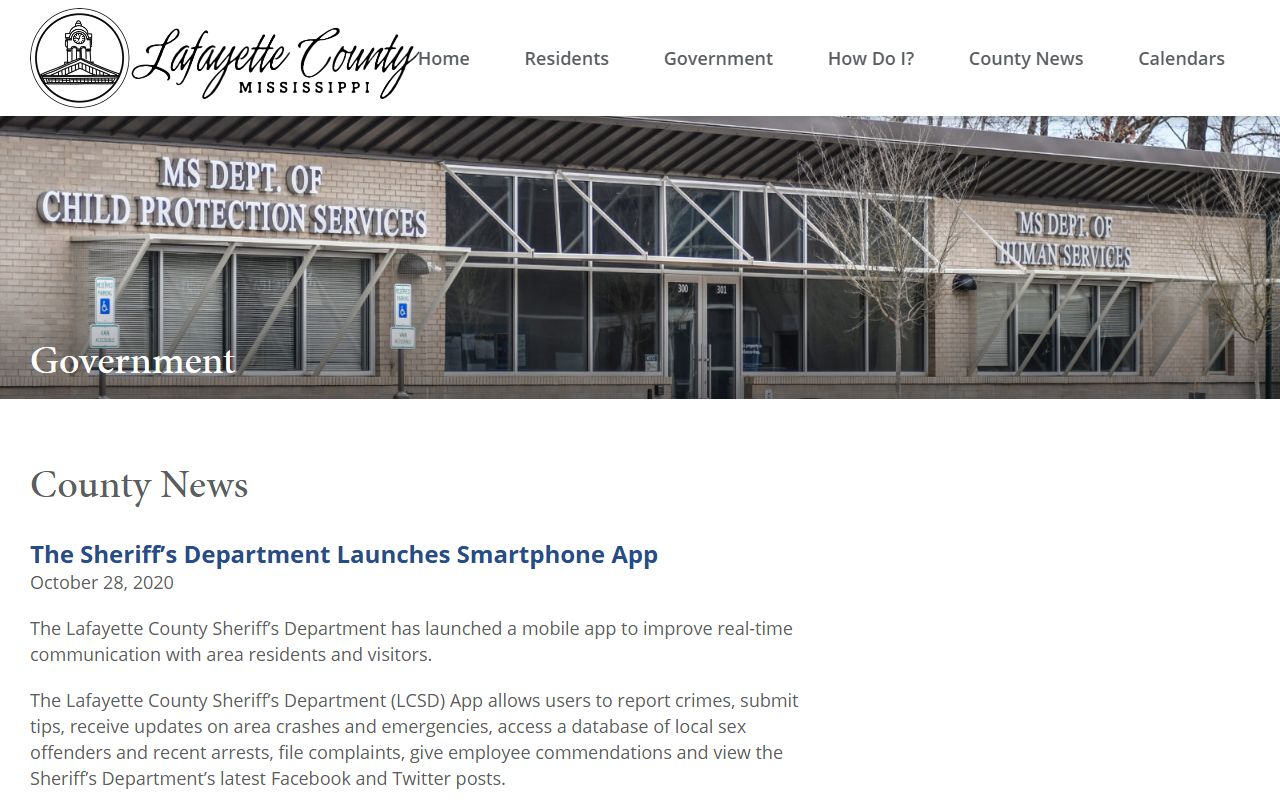
That notice frames the app as a community tool, which is why custody questions still go to the detention center phone line.
The app is free on both major platforms. Check the official store pages before installing, since lookalike apps can carry a similar name. The Apple App Store listing describes its crime-reporting and tip features.
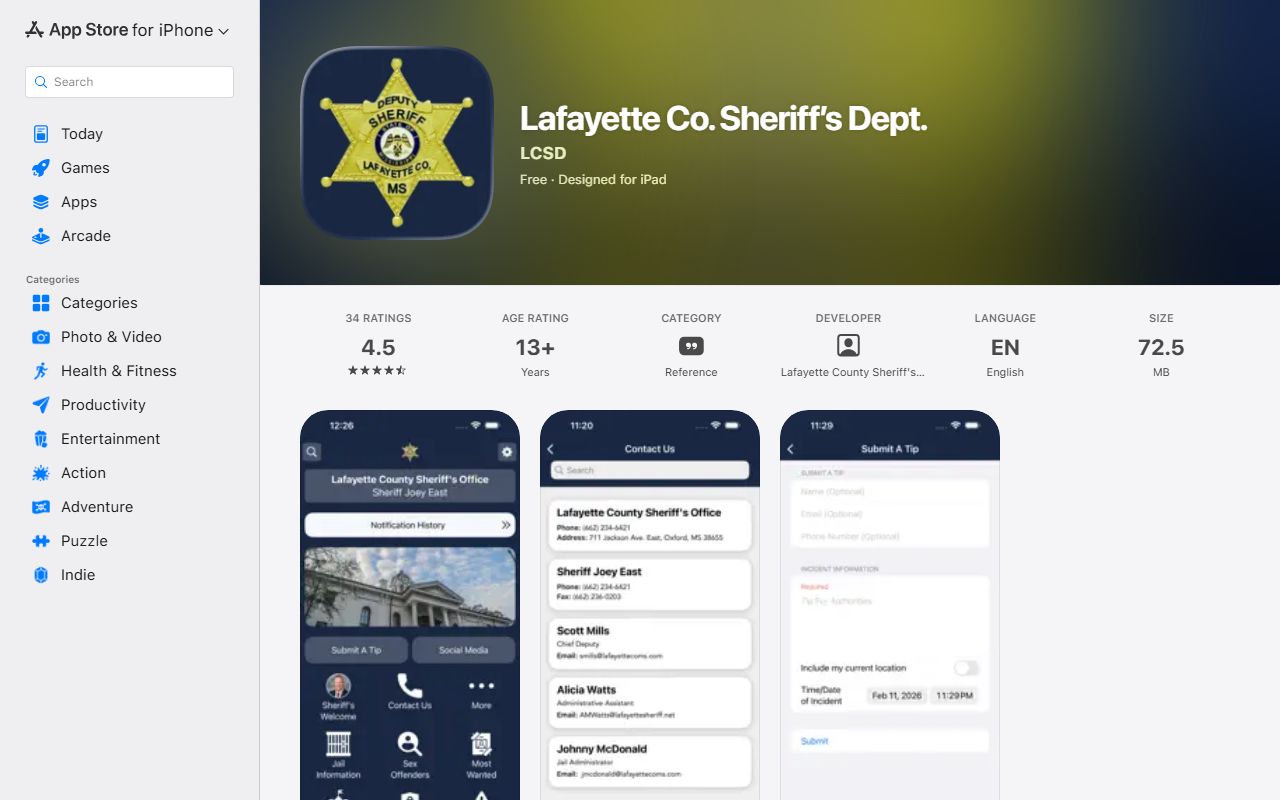
The same app is published for Android users as well. The Google Play listing carries the matching public-safety feature set.
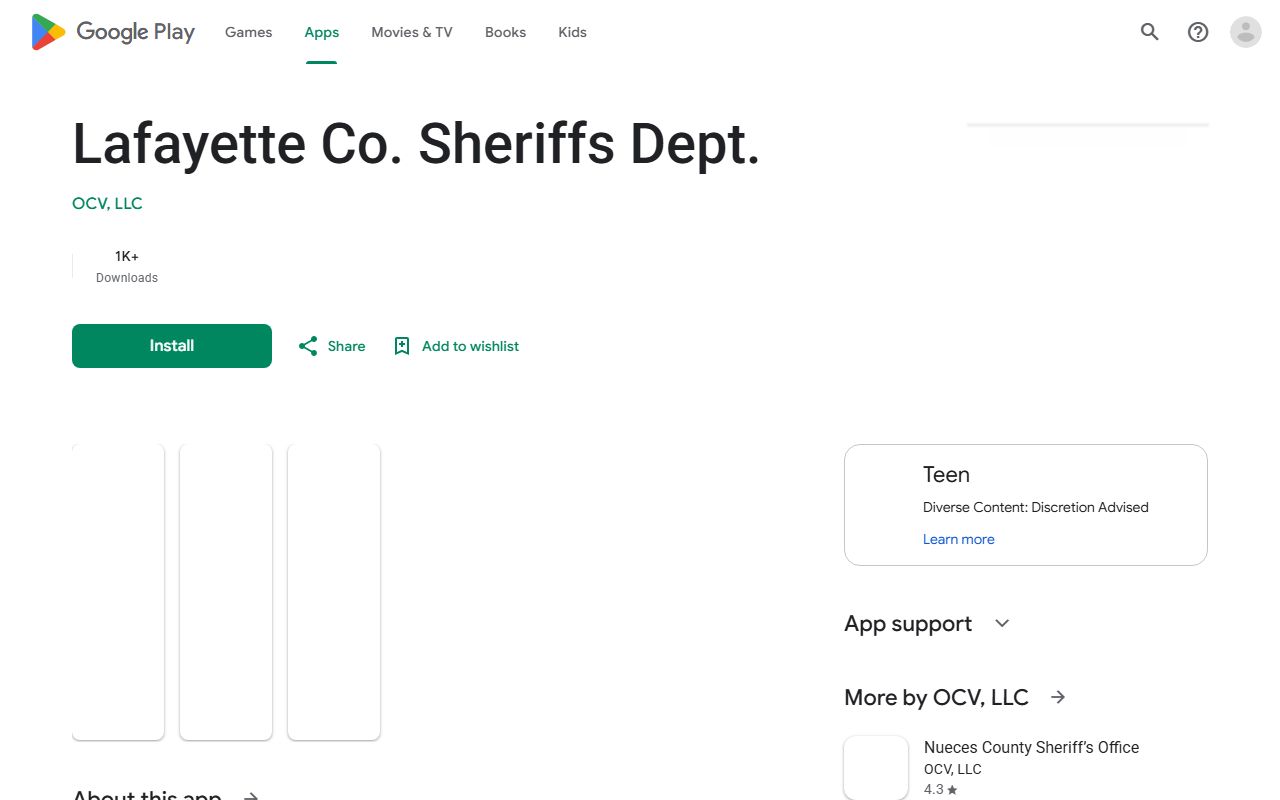
Neither store page advertises an inmate roster, so the app supports reporting and news rather than a custody search.
Mississippi Department of Corrections Search
A person sentenced to state prison is no longer in county pretrial custody. The Mississippi Department of Corrections keeps an online search for sentenced inmates and parolees. It will not show someone awaiting trial in the Lafayette County jail. Use it when a person has been convicted and transferred to state custody, or when checking parole status. The search accepts a name or a state ID number, with the fields below.
| Field Label | Type | Required | Notes |
|---|---|---|---|
| First Name | Text | Optional | Search a state inmate or parolee by name. |
| Last Name | Text | Optional | Search a state inmate or parolee by name. |
| MDOC ID Number | Text | Optional | Search by the state correctional ID number. |
| Search button | Button | n/a | Enter a name or an ID, then run the search. |
The MDOC homepage hosts this inmate and parolee search.
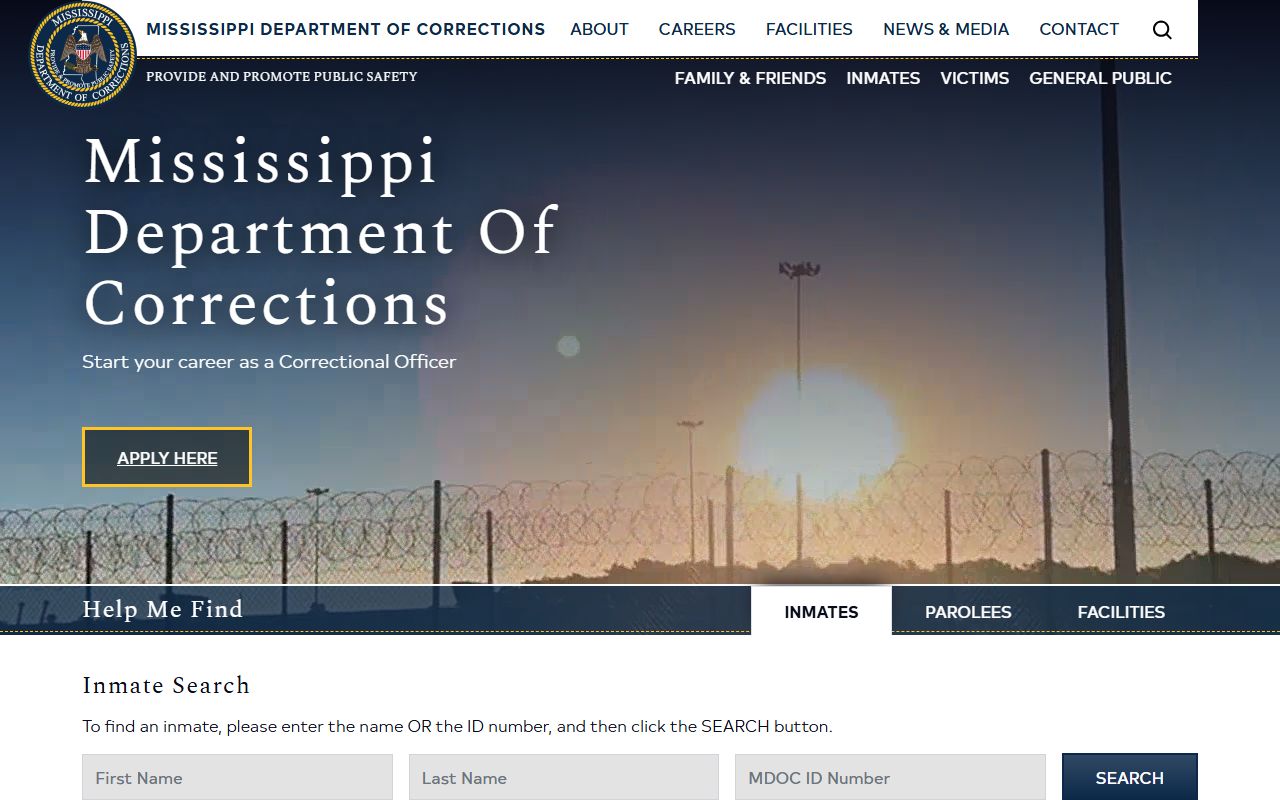
State data fills the gap once a person leaves the county jail, but it never replaces a call for current pretrial status.
Lafayette County Commissary and Inmate Funds
The detention center has moved toward kiosk-based services for inmates and their families. Family members can use money kiosks to load funds onto an inmate's commissary account. Inmates use kiosks to buy snacks and drinks, reach an electronic law library to prepare a defense, and pay to call, video chat, or email people in or out of state. The same system supports virtual hearings with a judge, which cuts transport between the jail and Justice Court. The sheriff has described the effort as a step toward a paperless and cashless operation.
The county outlined these upgrades in a piece on correctional facility updates.

That article is the clearest official source on kiosk deposits, calls, and video chat at the jail.
Jail vendors and payment options change, so confirm the current provider before sending money. Call (662) 234-6421 before depositing funds online or mailing a money order. Be wary of callers who claim a relative is in jail and demand quick payment. Verify any such claim through the Sheriff's Department first, since the office has posted scam warnings about this exact tactic.
Lafayette County Visitation and Communication
The county does not publish a fixed in-person visitation calendar, so the practical schedule comes from a direct call. The table below summarizes what the official materials confirm and the action that gets a current answer.
| Topic | Officially Confirmed | Practical Action |
|---|---|---|
| In-person visitation | No current schedule located on official pages | Call the Detention Center at (662) 234-6421 before arrival. |
| Visitor parking | Free parking in front; overflow paid or free nearby | Arrive early and use Jackson Avenue parking if the lot is full. |
| Video visitation | Inmates can pay to video chat through kiosks | Ask the jail for the current provider, cost, and scheduling. |
| Phone and email | Inmates can pay to call or email family and friends | Ask whether accounts start at a lobby kiosk or a vendor portal. |
| Commissary deposits | Family can load funds at on-site money kiosks | Confirm accepted payment type before traveling to the jail. |
| Virtual hearings | Kiosks support virtual hearings with a judge | Check whether the next court date is in person or remote. |
| Mail rules | No official mail policy located | Call for allowed contents, ID requirements, and rejected items. |
Note: Use the 711 Jackson Ave. East address only as the facility location, and confirm whether mail needs a booking number or a vendor scanning address.
Booking Records and Public-Records Requests
Booking and jail records that do not appear in any portal can be requested in writing. Mississippi's Public Records Act treats public records as open for inspection unless a statute, rule, or court order restricts them. The county publishes a public-records request form as the formal fallback when a record is not online.
Law-enforcement and privacy exemptions can limit what a jail releases, especially while a case stays active. If the custody question began with an outstanding warrant record, that document follows its own path through the issuing court. A written request works best when it names the person, the date range, and the exact record sought, which helps staff find the file faster.
Restricted Lafayette County Custody Information
Not every custody detail is open to the public. Youth-court matters are confidential under Mississippi Section 43-21-251, so a juvenile's detention is not ordinary public-search material. Sealed and expunged records drop out of public results. Medical, mental-health, and personal identifiers such as Social Security numbers are redacted from any copy that is released.
Expunged arrests stop appearing in routine searches once a court signs the order under Mississippi Section 99-19-71. A jail may also hold back information tied to an active investigation. When a record seems missing, the cause is often a legal restriction rather than a clerical error, and the office that keeps the file can explain which exemption applies.